Why commercial awnings will define al fresco dining in 2026
Outdoor dining is now a permanent part of how hospitality businesses operate...
Read MoreOutdoor dining now sits at the centre of how pubs, cafés and restaurants plan revenue and service. Guests expect to sit outside comfortably without checking the forecast, and in 2026 that expectation continues to rise. This puts pressure on hospitality teams to keep service consistent when conditions change during the day. Awnings support that shift in a practical way by keeping tables in use, protecting guests from sun and light rain, and giving venues a clearer presence on the street. Indigo Shading works with hospitality businesses to deliver commercial shading solutions that support consistent outdoor service, from early planning through to installation.
Hospitality teams increasingly plan service around predictability. A busy service can quickly lose pace when outdoor tables become uncomfortable due to glare, sudden showers, or heat building up in certain areas. Guests do not experience this as a weather issue; they experience it as part of your venue experience. When outdoor comfort is controlled, it becomes easier to manage table availability across the day, accept bookings with confidence, and keep service flowing without constant intervention. This approach also supports better use of staff time, as fewer reactive changes are needed during service, which helps managers maintain control during peak periods.
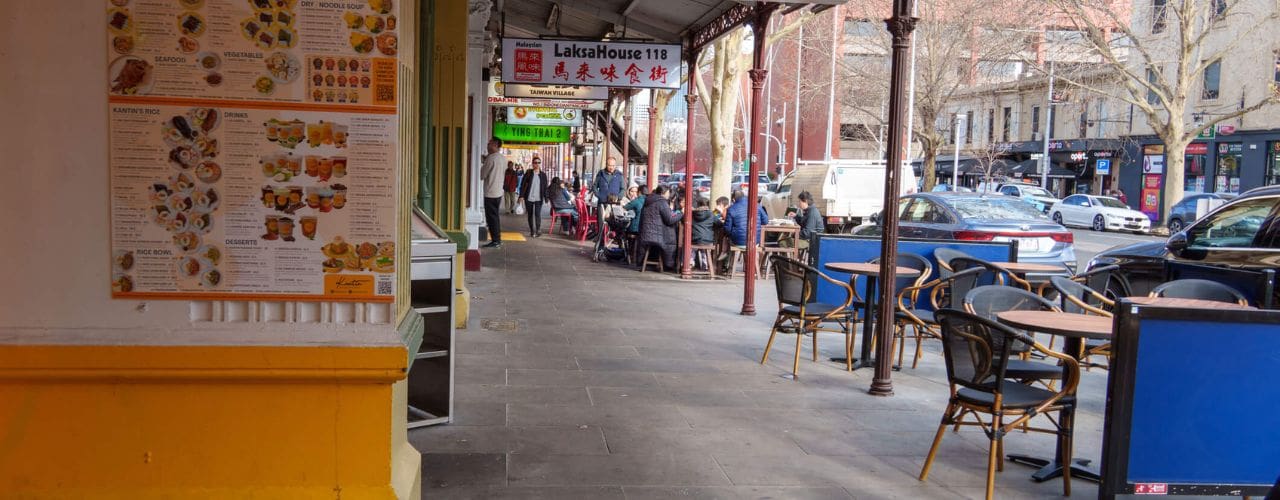
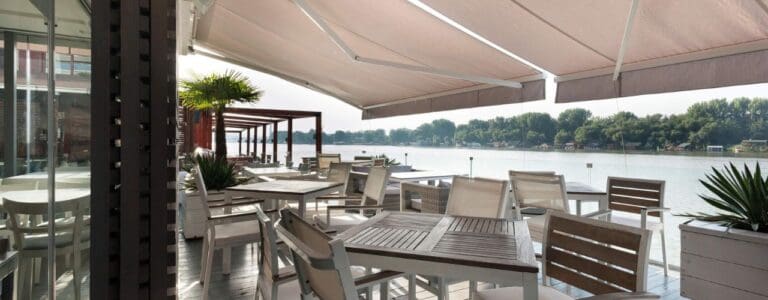
Guests choose outdoor tables for atmosphere, but comfort still shapes how long they stay. Direct sun causes glare on menus and discomfort at the table, while light rain often leads to rushed moves, delays, and confusion for staff and guests alike. Well specified restaurant awnings help protect diners from sun and rain, which reduces disruption and keeps outdoor seating usable through more of the day. Modern systems can also support lighting, heating, and side protection, which helps extend use into cooler months without changing the layout. Fabric performance also matters, as many commercial awning materials offer high UV protection, which supports guest comfort and helps reduce wear on furniture positioned underneath.
If these challenges show up regularly during busy services, this is often the right time to step back and assess how your outdoor area performs in practice. A short conversation with Indigo Shading can help you identify where comfort breaks down, which tables cause disruption, and what type of shading would realistically improve service flow for your team without overcomplicating the setup. This kind of review often reveals small layout or coverage gaps that have a disproportionate impact on guest satisfaction and staff workload.
Outdoor tables often sit empty on mixed weather days, which reduces revenue while still demanding staff attention. Looking ahead to 2026, many venues want outdoor areas that behave like indoor seating in terms of reliability. Restaurant awnings support this by making more of the space usable more consistently, which allows you to plan covers and staffing with greater certainty. This consistency also supports better forecasting, helping operators make informed decisions about opening hours, staffing levels, and promotional activity tied to outdoor seating.
Outdoor dining also shapes how people judge a venue before they step inside. A well organised frontage signals care and professionalism, which influences walk ins and repeat visits. Restaurant awnings add structure and visual clarity, helping venues stand out in busy areas and making entrances easier to spot. For cafés, this affects commuter trade, for pubs it shapes evening footfall, and for restaurants it influences lunch and dinner decisions when outdoor seating should feel intentional rather than temporary. Over time, this visual consistency helps reinforce brand identity in competitive locations.
Guest experience often hinges on small, repeated issues such as sun glare at specific tables, rain drifting into one corner, or guests asking to move because heat builds up in certain areas. These moments slow service and distract staff from other priorities. Restaurant awnings reduce these interruptions by creating a more controlled outdoor environment where guests settle more easily and staff spend less time reacting. This matters in 2026 as many hospitality teams continue to operate with lean staffing, where efficiency and calm service delivery directly affect retention and morale.
Every site brings different constraints, from narrow pavement frontages to large terraces or courtyards. A practical starting point is to look at how your outdoor area performs during real service and identify where disruption begins. Consider which tables attract the most complaints, where weather affects comfort first, and how staff move between indoor and outdoor sections. These observations help guide specification, so the solution supports actual service patterns instead of visual preference alone, which reduces the risk of underused seating after installation.
Looking ahead, many hospitality operators are placing greater value on decisions that reduce uncertainty. Outdoor seating often introduces variables that are hard to control, from sudden weather changes to uneven guest comfort across different tables. In 2026, the venues that perform best tend to be those that remove as many unknowns as possible from day-to-day operations. Thoughtful use of shading helps achieve this by giving managers a clearer picture of how many seats they can rely on throughout service. This supports more confident booking management, clearer communication with guests, and fewer compromises during peak periods. It also helps teams work with intention rather than reaction, which improves service rhythm and reduces stress on busy shifts. When outdoor areas are designed with coverage in mind from the start, they become easier to integrate into staffing plans, cleaning routines, and opening schedules. Over time, this consistency feeds into stronger operational habits, better guest feedback, and a clearer understanding of how outdoor seating contributes to overall performance. Instead of treating external areas as a variable, they become a known quantity that supports planning across the week, not just on ideal weather days.
Hospitality projects need to minimise disruption and protect trading hours. Installations should be planned carefully, delivered on schedule, and finished cleanly so venues can continue operating with minimal impact. Indigo Shading’s approach begins with consultation and site assessment, followed by clear specification and professional installation, with ongoing guidance to help systems perform consistently through seasonal change and regular use. One useful way to measure success after installation is to track outcomes such as steadier outdoor covers, improved guest feedback, and stronger walk in interest.
Outdoor dining in 2026 rewards venues that deliver comfort and consistency across changing conditions. Guests want to relax without compromise, teams want fewer disruptions, and operators want reliable use of every available seat. Restaurant awnings support this by protecting guests from sun and rain, strengthening street presence, and keeping outdoor areas active across more of the year, while also supporting better planning and operational control.
If you are reviewing your outdoor seating strategy or planning improvements ahead of the next trading cycle, speaking with us is a practical next step. Our team can help you identify solutions that improve comfort, capacity, and day to day operations in a way that fits how your venue works and how your team delivers service.
Your ultimate resource for expert insights, industry trends, and practical tips on outdoor shading solutions.
Outdoor dining is now a permanent part of how hospitality businesses operate...
Read More
On a busy high street, hospitality venues compete for attention long before...
Read More
The way your business looks from the outside matters. It influences how...
Read More