Tips for Creating Welcoming Outdoor Spaces with Cafe Barriers
Outdoor seating plays a growing role in how pubs, cafés, and restaurants...
Read MoreOutdoor dining is now a permanent part of how hospitality businesses operate in the UK. By 2026, pubs, cafés, hotels, and restaurants will no longer treat outdoor seating as an optional addition. It will sit alongside indoor space as part of overall capacity planning, staffing decisions, and long-term revenue forecasting.
This shift is driven by customer behaviour, changing weather patterns, and pressure on indoor space. Businesses that plan for these factors now will be better positioned to protect income and maintain service standards in the years ahead. Awnings play a central role in that planning, particularly when outdoor areas need to perform consistently across more months of the year.
Forward thinking operators are already assessing how outdoor spaces contribute to weekly turnover rather than treating them as weather dependent overflow. This change in mindset influences how venues invest, design layouts, and schedule teams.
In recent years, many venues expanded outdoor seating quickly in response to demand. In 2026, the focus changes from short term adaptation to structured design. Outdoor areas need to operate reliably during busy periods, quieter trading days, and changing seasons.
Well-designed commercial awnings allow businesses to plan outdoor capacity with confidence. Seating areas remain usable during rain, strong sunlight, and cooler conditions. This stability supports more accurate forecasting, better rota planning, and fewer last minute service changes.
For hospitality teams, this also reduces disruption. Service can continue smoothly without sudden moves indoors, cancelled bookings, or customer frustration caused by unpredictable conditions.
Customer expectations around outdoor dining have matured. Guests still value fresh air and open surroundings, but comfort now plays a larger role in decision making. Shade, shelter, and temperature control influence how long people stay and how likely they are to return.
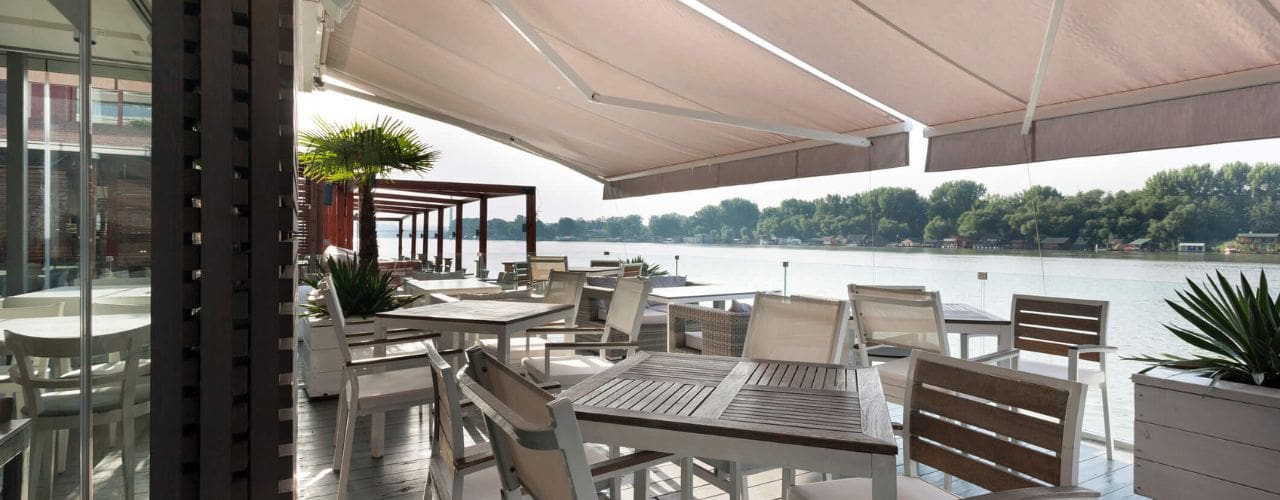
Awnings create a controlled outdoor environment without closing the space off. They reduce glare during brighter days and limit exposure during rainfall. This allows customers to focus on the dining experience rather than the conditions around them.
From a business perspective, improved comfort supports longer dwell time and steadier trade across the day. Breakfast, lunch, and evening service all benefit when outdoor seating feels dependable.
Indoor expansion often comes with high costs, planning constraints, or operational disruption. Outdoor areas offer a more flexible way to grow capacity, but only when they can be used consistently.
Installing commercial awnings helps businesses convert terraces, courtyards, and pavement seating into dependable dining zones. These spaces become part of the venue’s usable footprint rather than overflow areas that depend on good weather.
This approach also supports future flexibility. As demand changes, seating layouts can be adjusted without altering the building itself, giving operators more control over how space is used year to year.
Investment decisions in hospitality increasingly focus on durability and adaptability. Equipment and infrastructure must perform over time and support future operating models.
Commercial grade awnings are designed for frequent use and variable conditions. Retractable systems offer flexibility across different times of day and seasons. Venues can adjust coverage to suit service style, customer numbers, and weather conditions without reconfiguring the space.
This adaptability reduces the need for reactive spending. Businesses avoid repeated short term purchases and instead invest in systems that continue to support operations as expectations change.
Outdoor dining areas often form the first point of contact between a venue and passing customers. Appearance influences perception, particularly in busy high streets and hospitality hubs.
High quality commercial awnings contribute to a professional and consistent frontage. Colour, structure, and finish can be aligned with branding, helping venues present a clear and considered identity.
From a practical point of view, good design also improves usability. Proper drainage, correct pitch, and thoughtful positioning protect customers, staff, and entrances. These details reduce maintenance issues and support smoother daily operation.
Outdoor dining affects staff as much as customers. Poorly protected spaces create pressure during service, particularly when weather conditions change suddenly.
Sheltered seating areas allow teams to work without interruption. Food service continues without rushing, and layouts remain stable throughout the day. Clear zones also improve movement and communication during busy periods.
Over time, these improvements support training and consistency. New team members adapt more quickly when outdoor areas operate in a predictable way.
Sustainability considerations increasingly influence hospitality planning. Durable outdoor infrastructure reduces reliance on temporary solutions that require frequent replacement.
By extending the usability of outdoor seating, awnings can also reduce pressure on indoor heating and lighting during milder months. This supports more efficient use of space and resources while maintaining customer comfort.
This approach aligns with longer term operational planning, where efficiency and reliability support profitability.
Future focused hospitality design looks at how spaces perform across different scenarios. Busy weekends, quieter weekdays, unpredictable weather, and staffing variations all need consideration.
Professional planning ensures awnings integrate with existing layouts, access points, and service routes. This avoids compromises that can limit usability later. When outdoor spaces are designed properly from the outset, they support growth rather than restrict it.
If your business is reviewing how outdoor areas will perform over the next few years, this is the right time to take a structured approach. Awnings should support long term capacity planning, customer comfort, and operational efficiency.
Indigo Shading works with hospitality businesses to design and install outdoor solutions that remain effective over time. This approach helps venues avoid short term fixes and focus on spaces that support future growth.
By 2026, outdoor dining will sit alongside indoor service as a core part of hospitality operations. Customers will continue to expect usable outdoor seating across more months of the year, and businesses will need infrastructure that supports that expectation.
Through thoughtful planning and durable design, commercial awnings help venues protect revenue, improve customer experience, and manage space more effectively. Outdoor areas become dependable assets rather than seasonal risks.
As operators look ahead, many are reassessing how outdoor areas fit into wider business planning. Decisions around layout, cover, and flow now influence licensing use, staffing efficiency, and menu delivery. Outdoor seating that works consistently allows teams to plan service with fewer adjustments and clearer expectations.
Future focused venues are also considering how outdoor spaces support private hire, seasonal promotions, and daytime trade. When outdoor areas remain usable in a wider range of conditions, they create more opportunities without adding pressure indoors. This forward planning approach helps businesses remain flexible as customer habits continue to evolve.
As hospitality businesses plan ahead, outdoor areas deserve the same attention as interiors. Decisions made now influence capacity, service standards, and customer perception for years to come.
Indigo Shading provides tailored awning solutions for pubs, cafés, hotels, and restaurants across the UK. With the right design and installation, outdoor dining spaces can support future operations, and evolving customer needs well beyond 2026. To discuss your plans, call the team or request a quote today.
Your ultimate resource for expert insights, industry trends, and practical tips on outdoor shading solutions.
Outdoor seating plays a growing role in how pubs, cafés, and restaurants...
Read More
Outdoor dining now sits at the centre of how pubs, cafés and...
Read More
On a busy high street, hospitality venues compete for attention long before...
Read More